
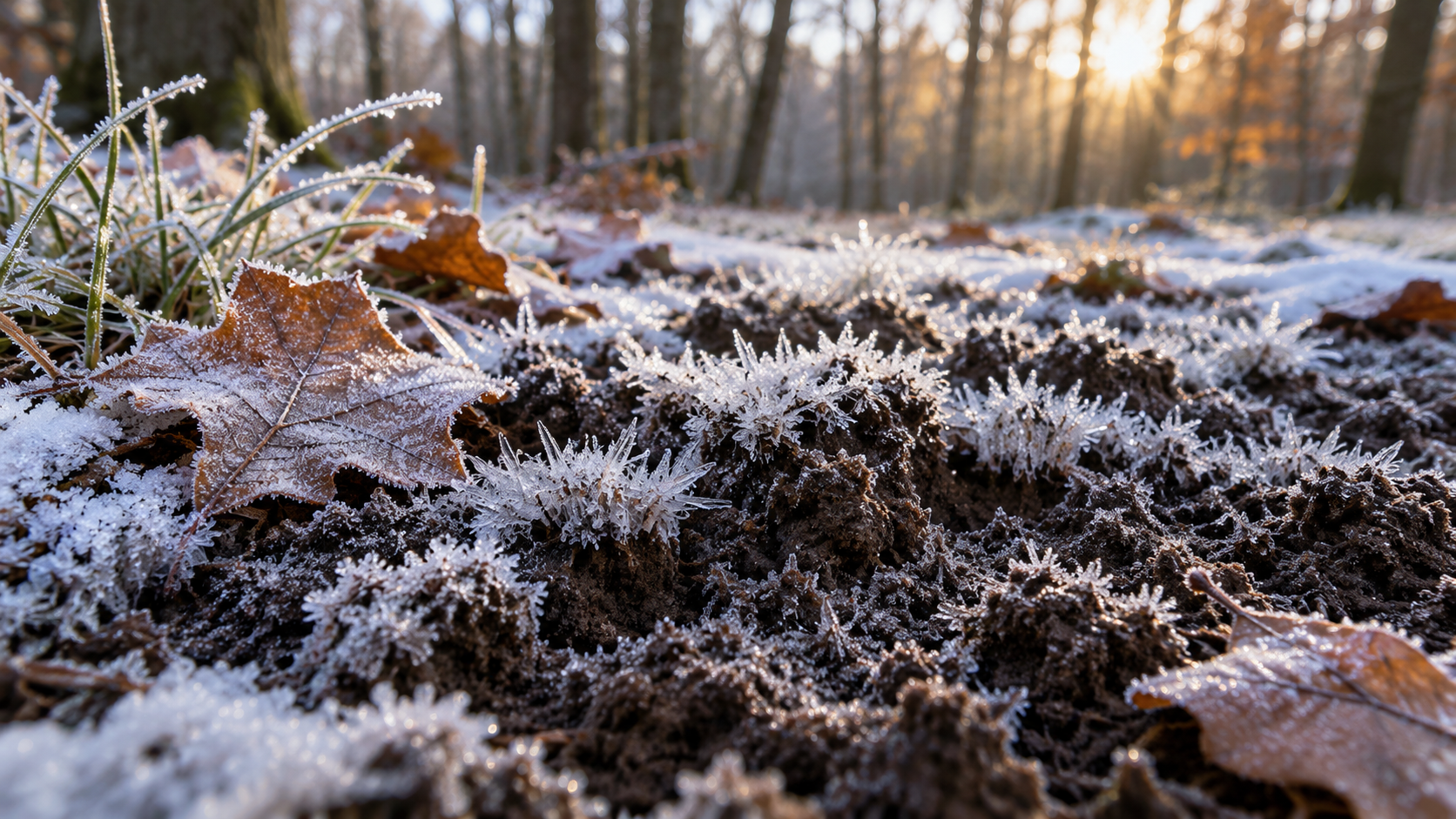
A Winter Science Adventure with Captain Nova
Have you ever stepped outside on a freezing winter morning and noticed that the ground feels as hard as a rock?
Maybe you've tried digging in your backyard, only to discover that your shovel barely makes a dent!
What's going on beneath your feet?
Believe it or not, there's an amazing science story happening underground every winter. And Captain Nova is here to help us uncover it!
🌎 The Ground Is Full of Surprises!
Soil might look like ordinary dirt, but it's actually a fascinating mixture of tiny rock particles, minerals, decaying plants, air, and water.
Between those tiny particles are spaces that can hold moisture.
When winter arrives and temperatures drop, something interesting begins to happen.
The water trapped inside the soil can start turning into ice!
And that's where the science gets exciting.
🧊 What Happens When Water Freezes?
Here's something surprising: Water expands when it freezes!
Most liquids shrink as they cool, but water behaves differently when it turns into ice.
As the water between soil particles freezes, it expands and can push against the surrounding soil.
When enough water freezes, the ground can become extremely hard.
But that's not all!
Sometimes freezing water causes the ground to rise slightly. Scientists call this frost heave.
Frost heave can lift sidewalks, shift rocks, and even damage roads.
All because of the incredible power of freezing water!
❄️ Does the Ground Freeze All the Way Down?
Great question, Science Scouts!
The answer is usually no.
When cold weather arrives, the soil near the surface cools first.
As freezing temperatures continue, frost can reach deeper underground.
But farther down, the soil often remains warmer.
How deep the ground freezes depends on several things:
How cold the weather gets
How long freezing temperatures last
How much moisture is in the soil
Whether snow covers the ground
What type of soil is present
And here's a surprising winter fact:
A thick blanket of snow can actually help keep the ground warmer!
Snow contains pockets of trapped air that slow the movement of heat. This helps insulate the soil beneath it.
Who knew snow could act like a winter blanket for the Earth?
🌱 How Do Plants Survive Frozen Ground?
You might wonder what happens to plants when the ground freezes.
Many plants have developed amazing ways to survive winter.
Some trees and plants become dormant, slowing their growth and conserving energy until warmer weather returns.
Others have roots extending below the frozen soil.
And some plants produce natural substances that help protect their cells from freezing damage.
Nature has some incredible survival strategies!
🔬 Captain Nova's Winter Science Challenge!
Ready to become a winter science detective?
Here's a simple experiment you can try at home with an adult.
You'll need:
Two small, clear, freezer-safe plastic containers
Water
A marker
A freezer
Step 1: Pour the same amount of water into both containers, leaving plenty of room at the top.
Step 2: Mark the water level on each container.
Step 3: Place one container in the freezer overnight. Leave the other at room temperature.
Step 4: The next day, compare the frozen water with the liquid water.
What do you notice?
Did the water level change?
The science behind it: When liquid water turns into ice, it expands and takes up more space!
Now imagine this happening in millions of tiny spaces beneath the ground.
That's one reason frozen soil can behave so differently from soil in warmer weather!
🚀 Science Is Everywhere — Even Beneath Your Feet!
The next time you walk outside on a frosty morning, remember that there's an entire world of science happening beneath your shoes.
From expanding ice crystals to sleeping plants and shifting soil, winter is full of incredible discoveries.
And sometimes the most exciting science adventures begin right in your own backyard.
Keep exploring, Science Scouts!
— Captain Nova 🚀
Want to keep the discoveries going? Explore more exciting hands-on activities in My First Earth Science Lab, where young scientists can investigate the amazing planet we call home.
